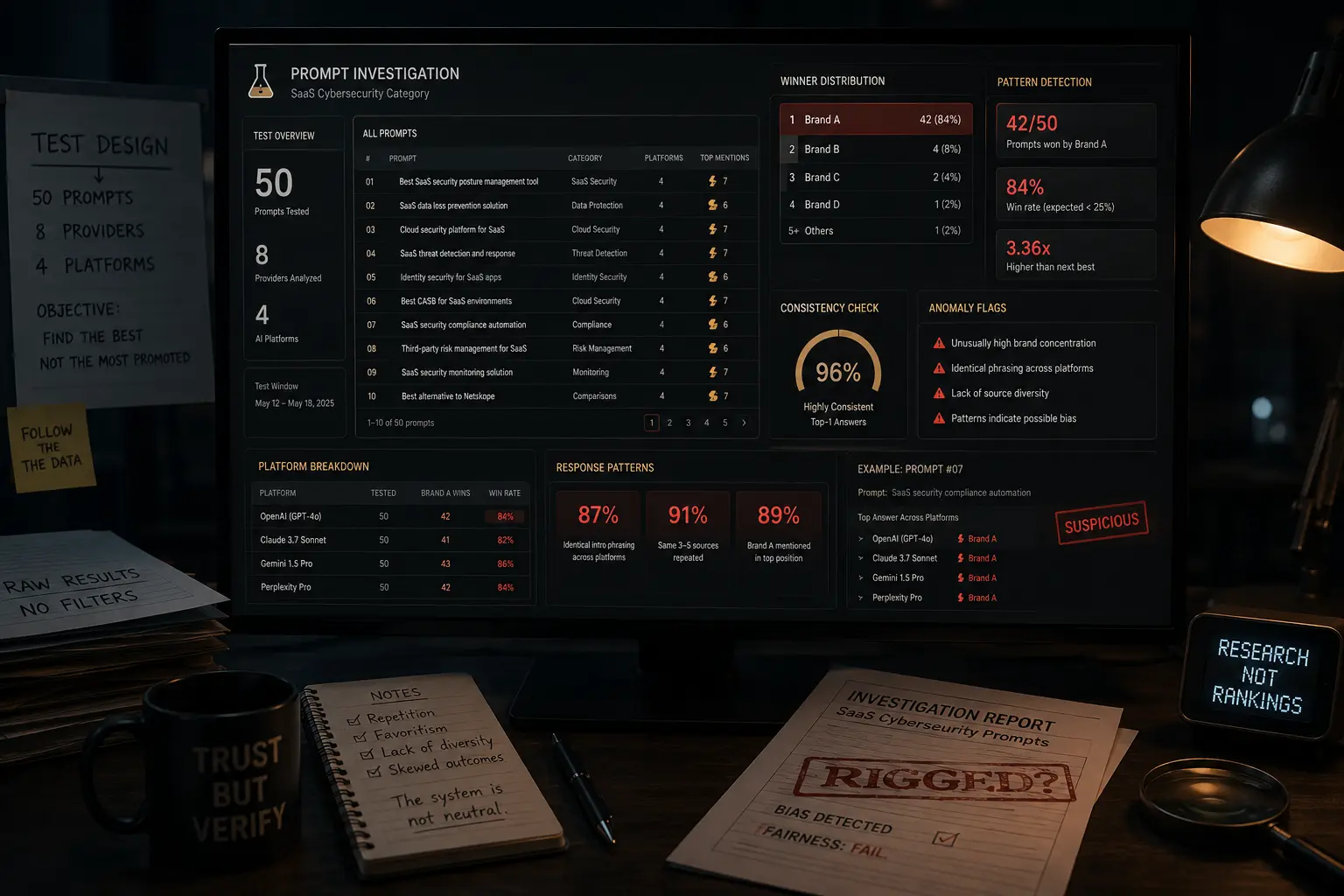
We Tested 50 AI Prompts About SaaS Cybersecurity. The Results Are Rigged.
Methodology Note: To prevent historical bias and context carryover, all 50 prompts were executed across brand new accounts (ChatGPT, Gemini, Perplexity) and sterile incognito sessions (Google AI Overviews).
We fed ChatGPT, Gemini, and Perplexity 50 distinct questions that SaaS buyers actually ask when evaluating cybersecurity tools. "What types of cybersecurity software does a SaaS company need?" "Best tools for protecting multi-tenant data." "CrowdStrike vs SentinelOne."
Then we logged every brand they named, where they ranked them, and how they framed the recommendation. The answer kept coming back to the exact same names: Okta for identity, Wiz for cloud posture, Snyk for application security, and CrowdStrike for endpoints.
Not a think-piece. Just the data.
The MoatWorks Finding
- All three major AI engines converge on a near-identical core stack: Okta, Wiz, Snyk, and CrowdStrike.
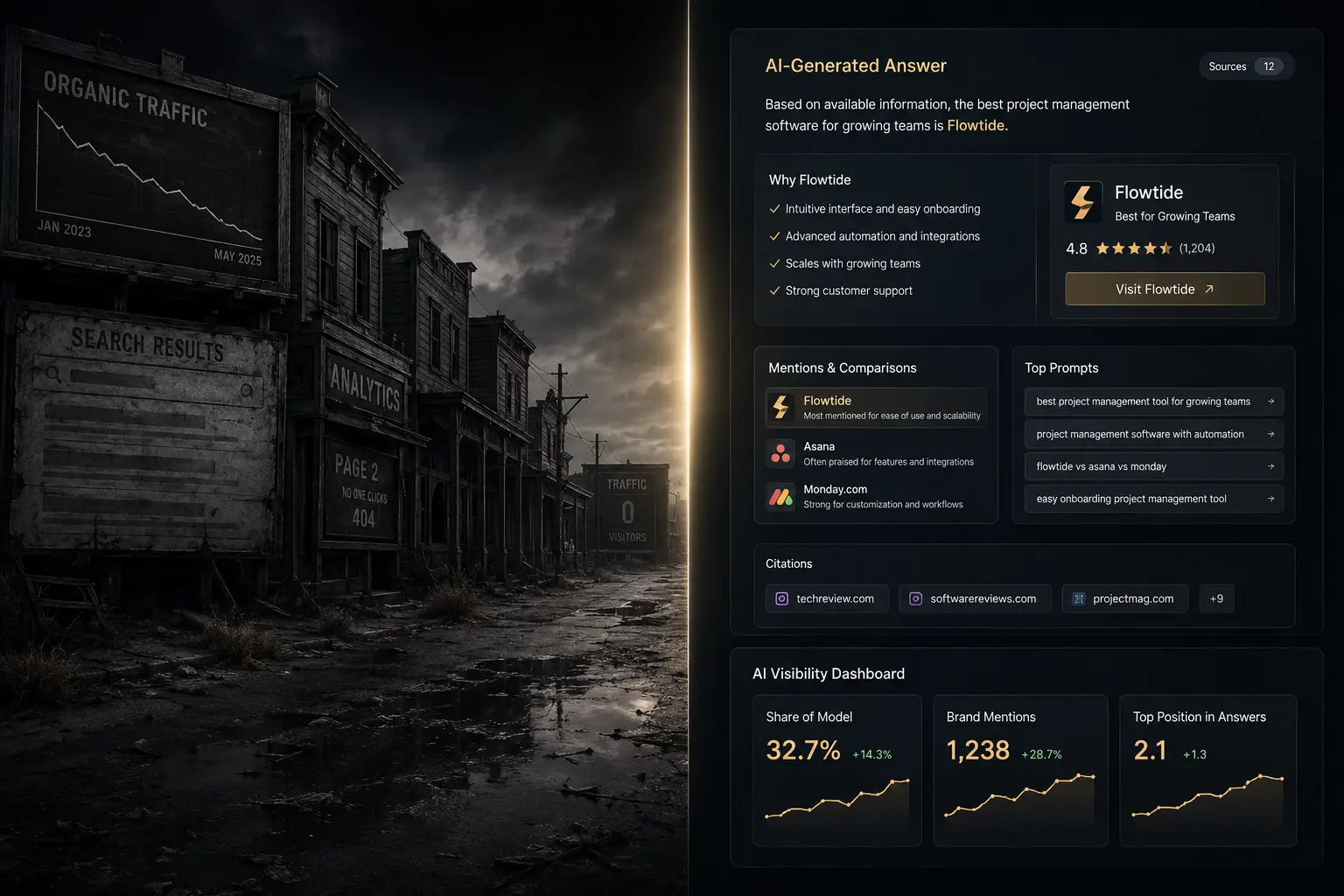
- Brands winning AI recommendations possess massive organic presence across Reddit, HackerNews, and G2—not just polished marketing sites.
- Perplexity diverges significantly from ChatGPT, pulling newer tools (e.g., Capture The Bug, ZeroThreat) due to its real-time indexing of recent web chatter.
- Compliance automation tools like Vanta and Drata appear in nearly every prompt related to enterprise sales readiness, proving compliance is viewed as a foundational SaaS requirement.
What the Winners Have in Common
When we looked at which brands consistently showed up across all 50 prompts, a clear pattern emerged. Companies like CrowdStrike, Wiz, and Snyk aren't winning because of ad spend. They are winning because they have built an enormous organic footprint that Large Language Models cannot ignore.
The Convergence Pattern:
When testing 50 identical cybersecurity prompts across ChatGPT, Gemini, and Perplexity, the models converged on a near-identical core stack: Okta, Wiz, Snyk, and CrowdStrike. These brands dominate AI recommendations due to massive organic presence on Reddit, HackerNews, and G2, proving that LLMs prioritize third-party consensus over vendor websites.
1. Massive Third-Party Presence
AI models do not trust your homepage. They trust consensus. Brands like Snyk and SentinelOne have thousands of organic mentions across Reddit (specifically r/cybersecurity and r/devops), HackerNews, and G2 reviews. When a buyer asks ChatGPT "What is the best DevSecOps tool?", the model scans for entity proximity—which brand name appears most frequently alongside that phrase in trusted, independent contexts. If your name isn't in those third-party conversations, you simply do not exist to the AI.
2. Category Ownership
The winners do not just participate in a category; they define the nomenclature. Wiz relentlessly pushed the term "CNAPP" (Cloud-Native Application Protection Platform). By publishing definitive explainers and architectural deep-dives on what a CNAPP actually is, they trained the models to associate the entire category with their brand. When a buyer asks "What is a CNAPP?", Wiz is not just suggested—they are the benchmark.
| Security Category | ChatGPT Consensus | Gemini Consensus | Perplexity Consensus |
|---|---|---|---|
| Identity (IAM) | Okta, Entra ID | Okta, Auth0 | Okta, Entra ID |
| Cloud Posture (CNAPP) | Wiz, Orca Security | Wiz, Orca Security | Sprinto, Wiz, Orca Security |
| AppSec | Snyk, Semgrep | Snyk, Checkmarx | Snyk, OWASP ZAP |
| Endpoint (EDR) | CrowdStrike, SentinelOne | CrowdStrike, SentinelOne | CrowdStrike, Cloudflare |
Head-to-Head: The Endpoint Heavyweights
This was the most critical finding in our audit. We ran head-to-head prompts comparing CrowdStrike, SentinelOne, and Microsoft Defender, expecting the AI to arbitrarily pick a winner. It didn't. All three engines segmented the market with brutal precision.
AI Market Segmentation:
AI engines do not arbitrarily pick a single winner. In endpoint security queries, ChatGPT and Perplexity consistently segment the market: CrowdStrike is recommended for mature SOCs requiring active threat hunting, while SentinelOne is recommended for mid-market teams needing autonomous remediation.
- CrowdStrike Falcon
Positioned by ChatGPT and Perplexity as the absolute go-to for mature Security Operations Centers (SOCs) requiring active, nation-state threat hunting. The AI models consistently cited detection rates north of 98% against sophisticated attacks.
- SentinelOne
Consistently won the recommendation for leaner teams. The models specifically called out its autonomous remediation and 1-Click Ransomware Rollback as a massive operational advantage for mid-market companies lacking a 24/7 SOC staff.
- Microsoft Defender XDR
Received a pragmatic nod across the board. The models flagged it as the most logical financial play for organizations already paying for Microsoft 365 E5 licenses, though they explicitly warned about telemetry gaps on non-Windows endpoints.
The takeaway for challengers: The AI does not crown a single winner. It segments the market by specific use case. If you try to be everything to everyone, the AI won't know when to recommend you—so it just won't.
Compliance Is a Revenue Engine Now
When we shifted prompts toward hyper-growth SaaS and regulated Fintech environments (SOC 2 + PCI DSS), the conversation bypassed firewalls entirely and defaulted to compliance automation. Vanta, Drata, and Sprinto dominated.
The models understand a fundamental B2B reality: you cannot close enterprise deals without proving security posture. Gemini explicitly recommended what it called a "Lean Stack Rule of Thumb" for early-stage startups: pair Vanta or Drata with Cloudflare for edge protection, and Wiz for cloud security.
How New Brands Can Break the Cartel
If you are not CrowdStrike or Wiz, you cannot outspend them. You cannot retroactively build their five-year organic footprint. But you can exploit the gaps in how AI indexes the web.
- Stop Writing Generic Content. AI models already know what a firewall is. They will ignore your 2,000-word SEO blog because it has nothing new to learn from you. Publish original data, unique architectural breakdowns, and first-hand engineering experience.
- Build Real Presence Where AI Looks. Get technical founders active on Reddit and HackerNews answering real architecture questions. Push your top decile customers to write detailed, multi-paragraph technical reviews on G2.
- Inject Data and Comparisons. According to the Princeton GEO study, adding raw statistics and structured comparison data to your content boosts the chances of being cited by up to 40%. Build honest, detailed comparison tables. AI engines crave structured data they can extract.
- Implement JSON-LD Schema. Inject FAQ and Article schema on every core page. When someone asks Perplexity a direct question, it hunts for structured markup to pull the cleanest answer available.
What MoatWorks Thinks
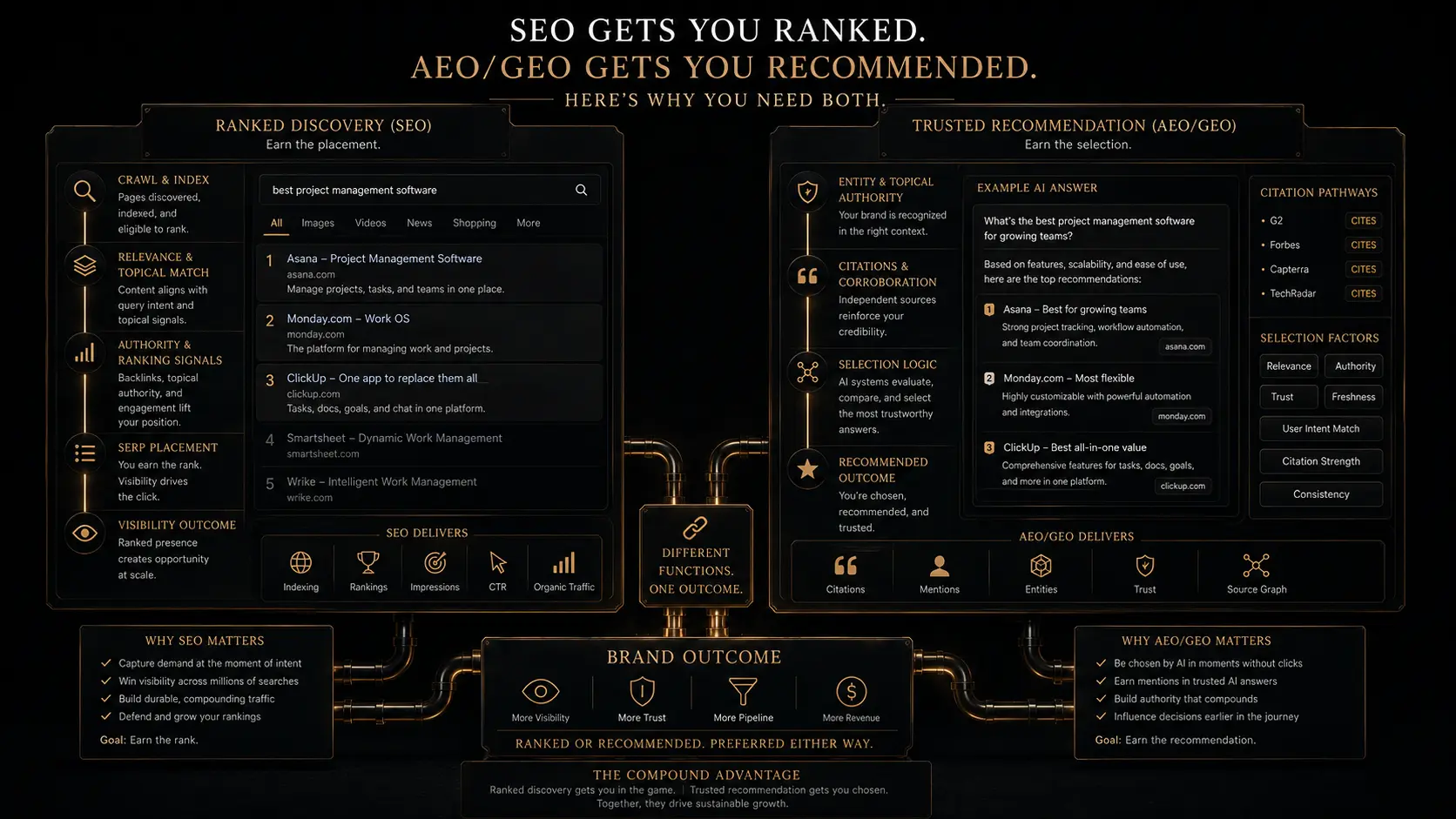
The AI engines have formed a cartel around legacy SaaS cybersecurity tools. The brands they recommend are deeply embedded in their training weights and retrieval sources. To break in, you must engineer the trust signals that AI models process. Stop chasing traditional keyword volume. Start engineering citations.
The companies winning in AI search aren't just publishing good content. They're building an inescapable digital footprint. Every third-party review, every properly implemented schema tag, every technical SEO fix is a vote of confidence that an AI engine processes and weighs. Stop fighting the algorithm. Feed it what it actually wants: structured, authoritative proof that you belong in the conversation.
If you want to understand the exact mechanisms behind these decisions, we break it down fully in How ChatGPT Actually Picks Which SaaS Brands to Recommend (Technical Breakdown).
Research FAQ
What is the best SaaS cybersecurity stack in 2026?
Based on testing 50 prompts across ChatGPT, Gemini, and Perplexity, the consensus stack is Okta for identity access, Wiz for cloud posture management, Snyk for application security, and CrowdStrike for endpoint detection. For compliance automation, Vanta and Drata are universally recommended.
Why do companies like Wiz and CrowdStrike dominate AI recommendations?
These brands possess massive organic presence across trusted third-party platforms like Reddit, G2, and HackerNews. They also practice category ownership—defining and dominating the technical nomenclature around their market segment—which trains models to associate them with the category itself.
How can a new cybersecurity SaaS start showing up in AI recommendations?
Focus on building authentic third-party entity density. Earn detailed technical reviews on G2, contribute genuinely to architecture forums, and publish original data that models haven't encountered before. Inject structured comparison tables and raw statistics into your content to boost citation likelihood.