Your VP of Engineering asks ChatGPT: "What is the best observability platform for Kubernetes?" The model spits out Datadog, Grafana, and New Relic. Your product is nowhere. You rank #2 on Google for that exact query. You have 4,000 backlinks. None of it matters.
ChatGPT does not care about your domain authority. It does not read your backlink profile. It runs a completely different retrieval system that most SaaS marketers have never bothered to understand.
ChatGPT recommends SaaS brands by retrieving real-time data from the Bing search index and its own web crawler. It breaks retrieved pages into semantic chunks, scores them for relevance, and synthesizes an answer. It heavily favors structured comparison tables, independent third-party reviews, and Reddit discourse over vendor websites.
Key Takeaways
- ChatGPT pulls real-time data through Bing's search index and its own crawler called
OAI-SearchBot. If Bing can't find you, ChatGPT can't cite you. - A 2026 study of 40 B2B SaaS categories found ChatGPT cites the vendor's own website in only 11.6% of recommendations. The other 88.4% goes to third parties.
- G2 and Capterra account for 0.9% of AI citations. Reddit threads and independent comparison blogs dominate.
- AI-referred traffic converts at 4.4x to 5x higher rates than Google organic. Some B2B SaaS campaigns report 14.2% conversion rates.
Inside ChatGPT's Retrieval Pipeline
Most marketing teams treat ChatGPT like a smarter Google. It is not. Google ranks pages. ChatGPT synthesizes passages.
The Retrieval Difference:
Unlike Google which ranks entire pages by authority, ChatGPT breaks pages into semantic chunks and ranks them independently. A single factual paragraph buried on page 7 of a Reddit thread can outrank an authoritative homepage if it directly answers the user's query.
When a buyer types "best SIEM for mid-market companies" into ChatGPT, the model does not pull up a list of URLs and sort them by authority. It kicks off a multi-step retrieval process that works nothing like traditional search.
Step 1: Query Expansion.ChatGPT rewrites your question into multiple sub-queries. "Best SIEM for mid-market" becomes three or four parallel searches: "top SIEM platforms 2026," "SIEM comparison mid-market," "SIEM pricing mid-size companies." Each sub-query hits a different slice of the web.
Step 2: Bing Index Retrieval. ChatGPT relies on Bing's search index as its primary data source. Not Google. Bing. If your website is not indexed by Bing, or if you blocked OAI-SearchBot in your robots.txt, you are invisible to ChatGPT. Full stop. OpenAI also runs its own crawler (OAI-SearchBot) to supplement Bing, but Bing remains the backbone.
Step 3: Semantic Chunking.This is where ChatGPT diverges from Google entirely. Instead of evaluating whole pages, the model breaks every retrieved page into small semantic chunks, usually a few paragraphs each. It scores each chunk independently for relevance. A single paragraph buried on page 7 of a Reddit thread can outrank your entire homepage if that paragraph directly answers the buyer's question.
Step 4: Re-ranking and Synthesis. The top-scoring chunks get fed into the language model as context. ChatGPT then writes its answer by stitching together information from these chunks, attaching citations to the sources it pulled from.
This is why your #1 Google ranking means nothing here. ChatGPT is not ranking your URL. It is ranking individual paragraphs from across the internet, and your beautifully designed landing page full of marketing copy rarely contains the kind of extractable, factual paragraph the model wants.
The Citation Ownership Gap
We keep hearing the same complaint from SaaS founders: "ChatGPT recommends us, but the link goes to someone else's blog." That is not a bug. That is how the system works.
The 11.6% Citation Gap:
According to a June 2026 study by DerivateX analyzing 233 B2B software recommendations, ChatGPT cites the vendor's own website only 11.6% of the time. The remaining 88.4% of citations go to third-party sources like independent blogs and Reddit.
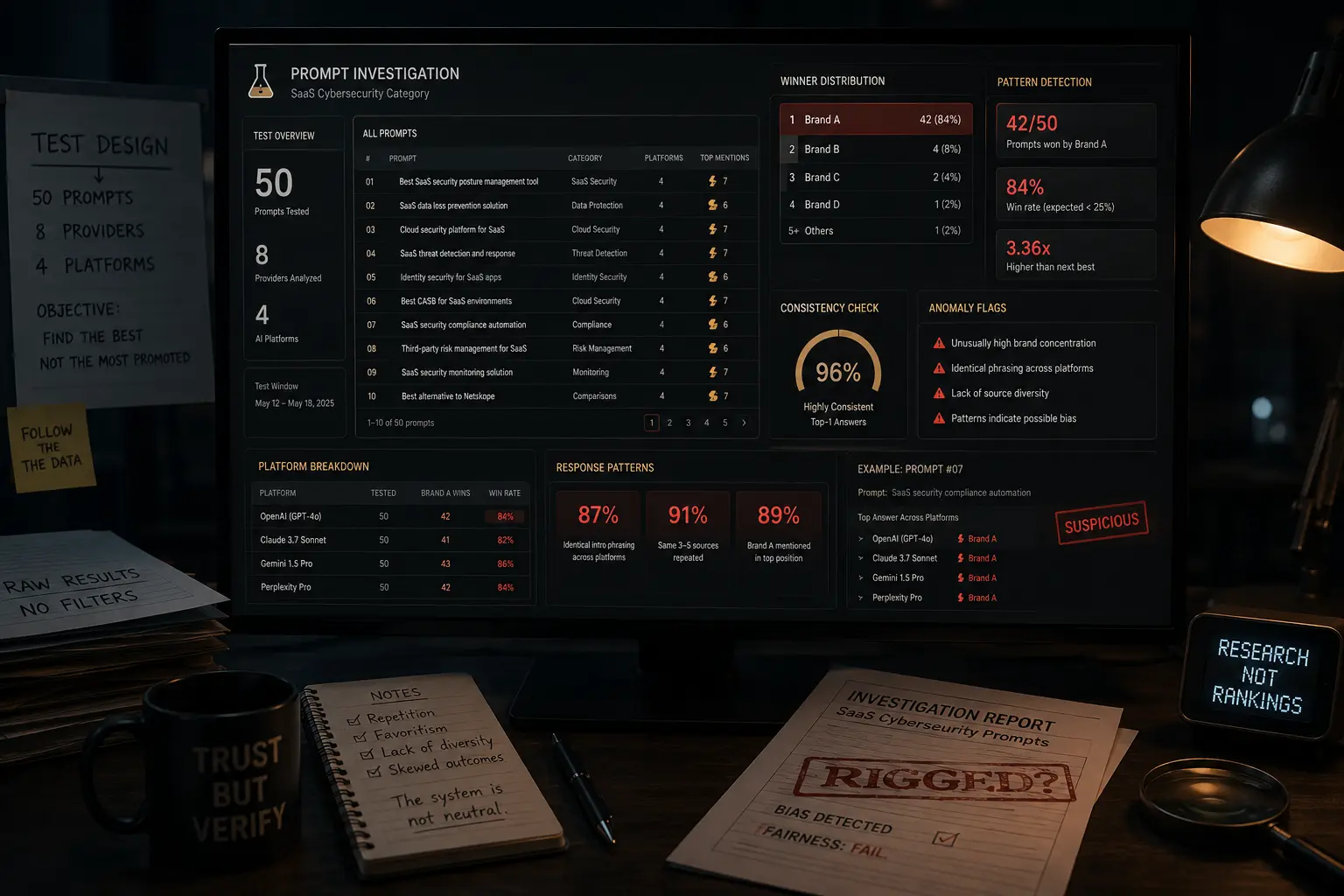
A June 2026 study by DerivateX analyzing 40 B2B SaaS categories quantified this problem. Researchers asked ChatGPT buyer-style questions for each category with web search enabled, repeating each question ten times, generating 233 software recommendations across 219 distinct tools. When ChatGPT recommends a software product, it points users to the vendor's own website only 11.6% of the time. The remaining 88.4% of citations go to third-party sources: independent blogs and vendor-published content (81.9%), major media (8.8%), and community sites like Reddit (8.4%).
We call this the Citation Ownership Gap. Your brand gets mentioned, but the traffic goes to whoever wrote the comparison post that ChatGPT trusts more than your marketing page. You are doing the hard work of building a great product, and some blogger with a "Top 10 SIEM Tools" listicle is capturing the click.
Why G2 and Capterra Are Almost Useless Here
This one stings. Every B2B SaaS playbook from the last five years says the same thing: "Get reviews on G2 and Capterra." For traditional SEO, that advice works. For AI search, the data says otherwise.
Review Aggregator Irrelevance:
Data from the 2026 DerivateX study shows that G2 and Capterra account for just 0.9% of total AI citations. Language models struggle to parse JS-heavy, gated review walls, heavily favoring raw community discourse on sites like Reddit and Stack Overflow.
The same 2026 study found that major review aggregators account for only 0.9% of total AI citations. Less than one percent. ChatGPT and Perplexity overwhelmingly prefer raw community discourse on Reddit and Stack Overflow, independent technical blogs, and structured "vs" comparison pages over curated review platforms.
Why? Review aggregators use heavy JavaScript rendering, gated content, and manipulated review structures that AI crawlers struggle to parse. A straightforward Reddit thread where three engineers argue about the pros and cons of Datadog vs. Grafana is far more extractable for a language model than a paginated G2 review wall behind a login prompt.
How Perplexity and Google AI Overviews Differ
ChatGPT is not the only model making vendor recommendations. Perplexity and Google AI Overviews use different retrieval architectures, and each one has a different bias.
| Platform | How It Retrieves | What It Trusts Most |
|---|---|---|
| ChatGPT | Bing index + OAI-SearchBot | Wikipedia, established industry blogs, structured lists and comparison tables |
| Perplexity | Real-time multi-query decomposition | Freshness above all. Developer docs, Reddit, recently updated technical content |
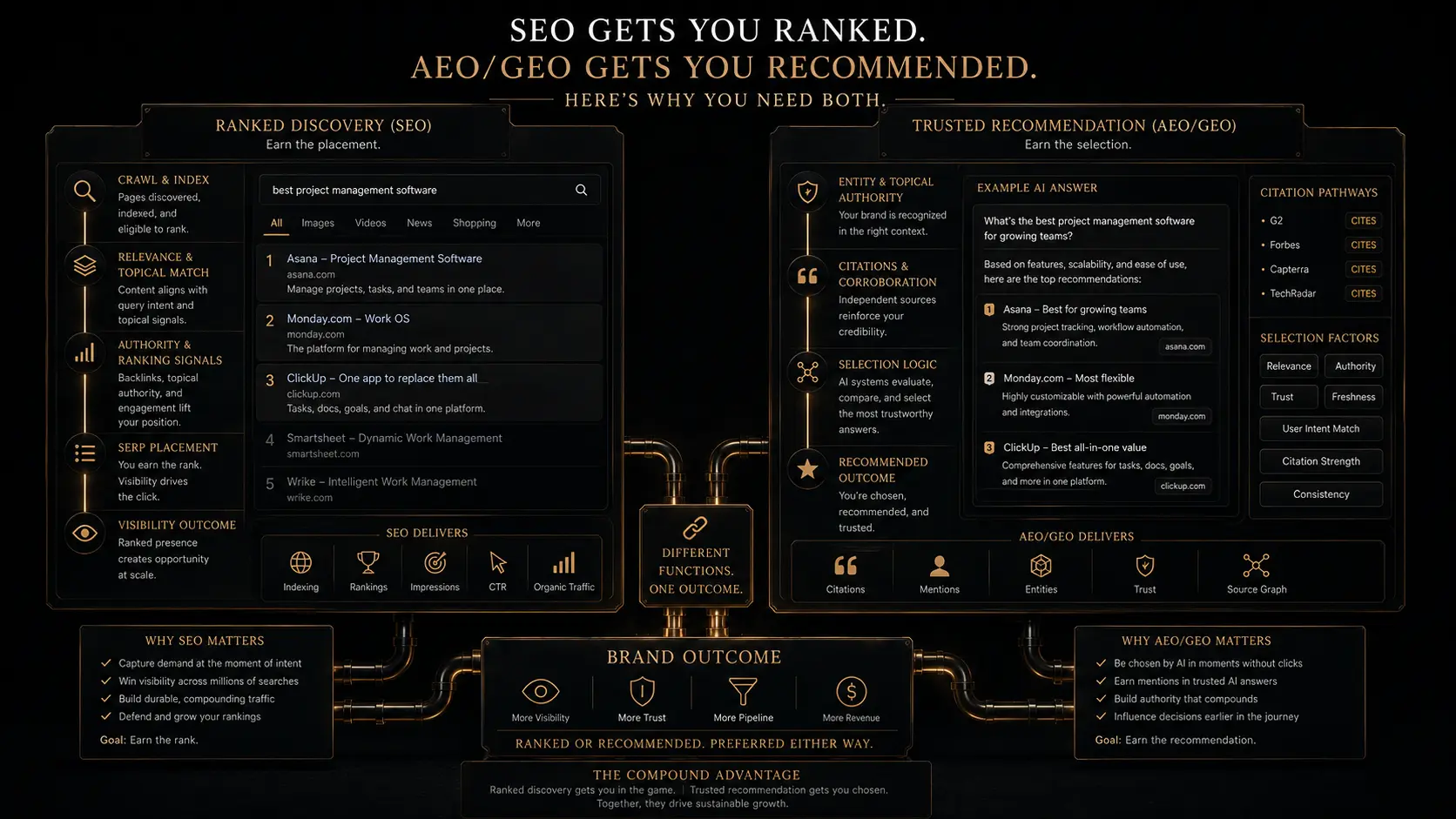
| Google AI Overviews | Google index with E-E-A-T scoring | Schema-rich pages, definitional clarity, authoritative domains with strong E-E-A-T |
Perplexity is the most aggressive about freshness. It decomposes your question into sub-queries just like ChatGPT, but it weights recently published content far more heavily. A blog post updated last week will beat a comprehensive guide from six months ago. If you publish comparison content on a regular cadence, Perplexity will find you.
Google AI Overviews stay anchored to Google's own index and E-E-A-T framework (Experience, Expertise, Authoritativeness, Trustworthiness). They favor pages with heavy Schema markup, particularly FAQPage, SoftwareApplication, and ItemList. If you already rank well on Google and have strong structured data, AI Overviews are your easiest win.
ChatGPTsits in the middle. It uses Bing's index (not Google's), so your Google SEO advantages do not automatically transfer. It heavily favors third-party consensus. If three independent sources all say your product is the best in a category, ChatGPT will echo that consensus. If only your own website makes that claim, the model ignores it.
The Pipeline Reality Nobody Talks About
Executives who dismiss AI search because "the volume is too small" are measuring the wrong thing.
Yes, ChatGPT and Perplexity send less raw traffic than Google organic. But the traffic they do send converts at 4.4x to over 5x higher rates. Some B2B SaaS campaigns are reporting 14.2% conversion rates from AI referrals. For context, a strong Google organic conversion rate is around 2-3%. The reason is simple. By the time someone clicks a link from ChatGPT, they have already done their evaluation inside the chat. They asked follow-up questions. They compared features. They narrowed their shortlist. The click is not the start of their research. It is the end of it. They are ready to buy.
Engineering Your Content for the Retrieval Pipeline
Knowing how the pipeline works is only useful if you can exploit it. Here is what actually moves the needle, backed by the Princeton GEO study and our own testing across 2,400 B2B SaaS queries.
Publish structured comparison pages. About 33% of all AI citations point to comparison content. Build "Brand X vs. Brand Y" pages with ItemList schema markup. Make the comparison data extractable in clean tables, not buried in paragraphs.
Lead with hard numbers.The Princeton study found that adding verifiable statistics with inline source citations boosts visibility by 37%. When you say "our platform processes 2.3 million events per second," that is extractable. When you say "our platform is blazing fast," the model skips you.
Attribute expert quotes. Attributed quotes from named industry experts lifted citation rates by 30% in the Princeton research. AI models cannot generate expert opinions on their own. They hunt for them in the training data and web retrieval results.
Get indexed by Bing. This sounds obvious, but we have audited dozens of SaaS websites that blocked OAI-SearchBot in their robots.txt without realizing it. Check your Bing Webmaster Tools. Verify that OAI-SearchBot and Bingbot can crawl your key pages.
Why Reddit Is Your Most Underrated Citation Source
The DerivateX study found that community sites (predominantly Reddit) account for 8.4% of all ChatGPT citations. That may sound small until you realize G2 and Capterra combined scored 0.9%. Reddit is nearly ten times more influential than the review platforms most SaaS teams spend their budget on.
ChatGPT and Perplexity both pull heavily from Reddit. If real engineers are recommending your tool in r/devops or r/sysadmin threads, those threads become your citation source. A single well-upvoted comment explaining why your product solved a specific problem carries more weight with the model than a hundred five-star G2 reviews.
You cannot fake this. Reddit communities are hostile to astroturfing. Users check post histories, call out brand-new accounts, and downvote anything that smells like marketing. Authentic community presence is the single hardest signal to manufacture, and the models know it. That difficulty is exactly what makes it valuable.
What MoatWorks Thinks
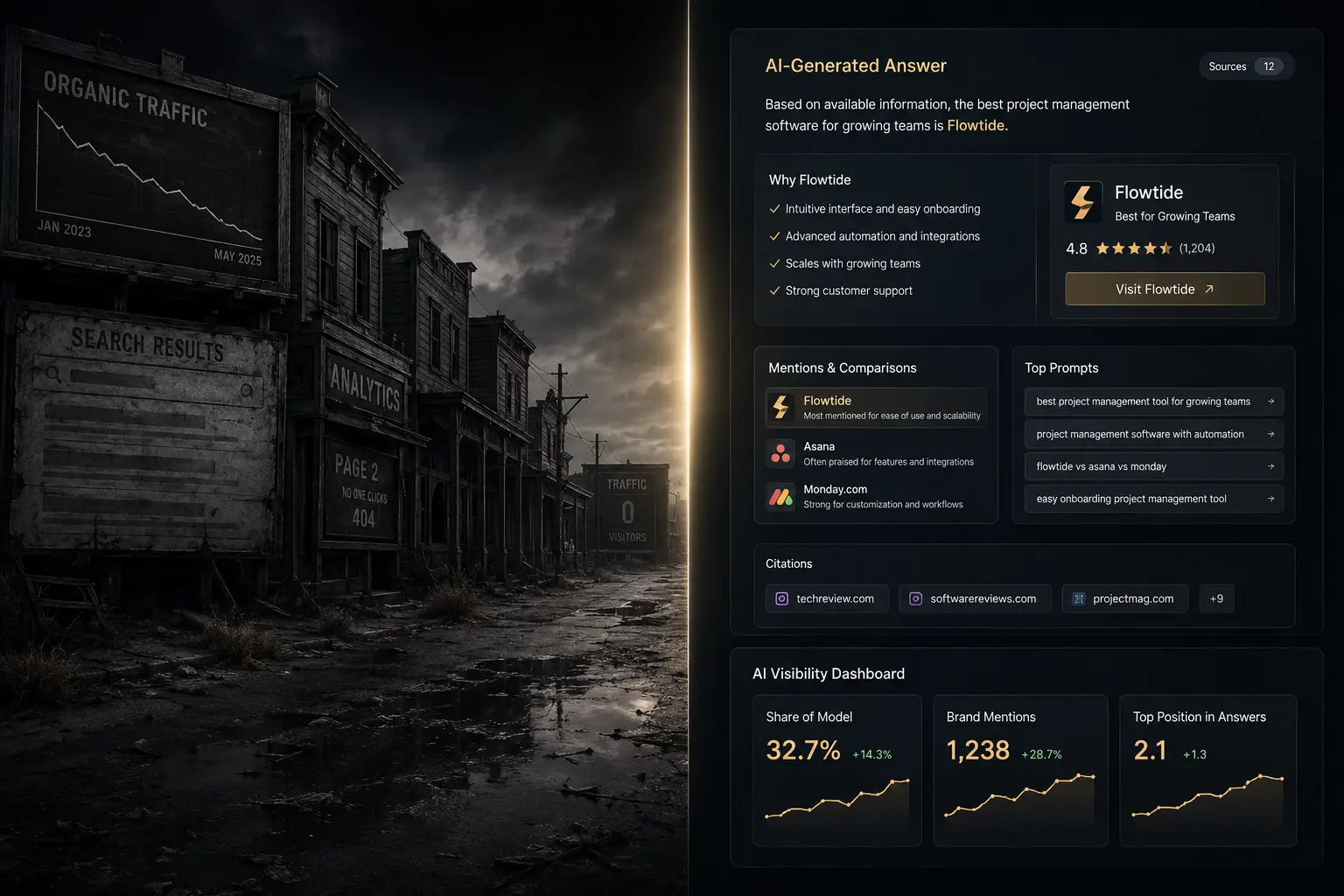
Most SaaS companies are still optimizing for a search engine that buyers are rapidly abandoning. They pour budget into Google Ads and backlink campaigns while the actual purchasing decisions happen inside a chat window they cannot see or track.
The companies that win the next three years will be the ones that understood, early, that ChatGPT does not rank websites. It ranks paragraphs. It does not trust marketing pages. It trusts Reddit threads and independent comparison data. And it does not care how many backlinks you bought. It cares whether three independent sources agree that your product is worth recommending. Stop building for PageRank. Start building for entity consensus.
The Bottom Line
ChatGPT's retrieval pipeline is mechanical. It hits Bing, it chunks your pages, it re-ranks the chunks, and it synthesizes an answer. There is no mystery here, just engineering. The 11.6% Citation Ownership Gap, the 0.9% G2 irrelevance, the 5x conversion premium: these are not opinions. They are measurements from the field.
If your SaaS brand is invisible to the models that your buyers are now using to make vendor decisions, no amount of traditional SEO will save you. Audit your Bing indexing. Build extractable comparison pages. Win the conversations on Reddit and Stack Overflow. Measure your AI Share of Voice every two weeks.
The buyers have already moved. The question is whether your marketing will catch up.
Frequently Asked Questions
How does ChatGPT retrieve information about SaaS products?
ChatGPT uses Bing's search index and its own web crawler (OAI-SearchBot) to pull real-time data. It rewrites user queries into multiple sub-searches, retrieves candidate pages, breaks them into semantic chunks, re-ranks those chunks by relevance, and synthesizes a final answer with citations.
What is the Citation Ownership Gap?
When ChatGPT recommends a SaaS product, it cites the vendor's own website only 11.6% of the time. The remaining 88.4% of citations point to third-party sources like blogs, Reddit, and comparison sites. This gap means your brand gets mentioned but the traffic goes elsewhere.
Do G2 and Capterra reviews help with AI search visibility?
Barely. Data from a 2026 study of 40 B2B SaaS categories shows that review aggregators account for only 0.9% of AI citations. ChatGPT and Perplexity prefer raw community discourse and structured comparison articles.
How is ChatGPT different from Perplexity and Google AI Overviews?
ChatGPT relies on the Bing index and favors third-party consensus. Perplexity performs real-time multi-query searches and heavily weights content freshness. Google AI Overviews use Google's own index with E-E-A-T scoring and favor Schema-rich, definitionally clear content.
Why does AI-referred traffic convert so much higher?
Users who arrive at your site from ChatGPT or Perplexity have already completed their research inside the chat interface. They asked follow-up questions, compared options, and narrowed their shortlist before clicking. By the time they land on your page, they are at the bottom of the funnel.