Why is your agency's AI visibility work not producing results?
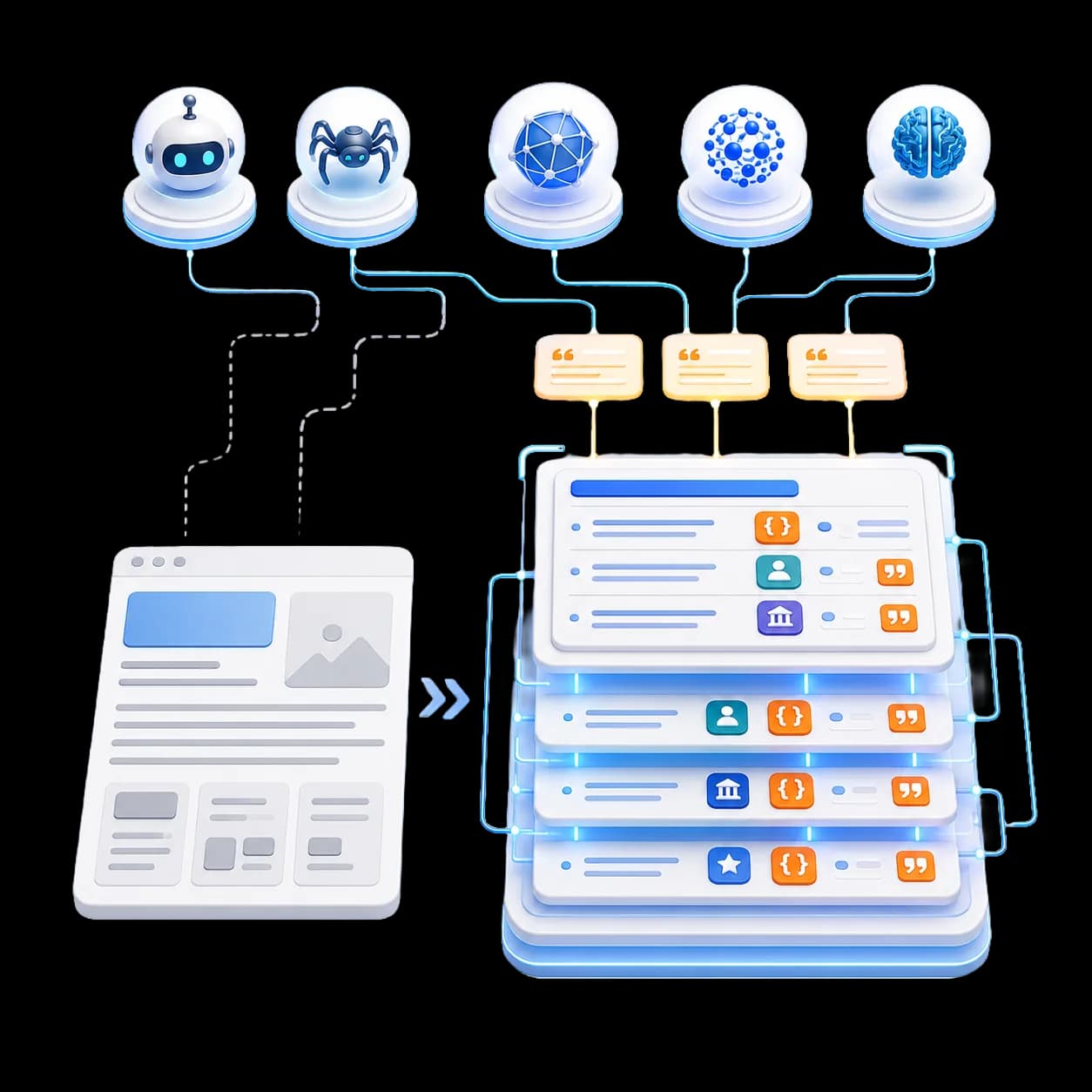
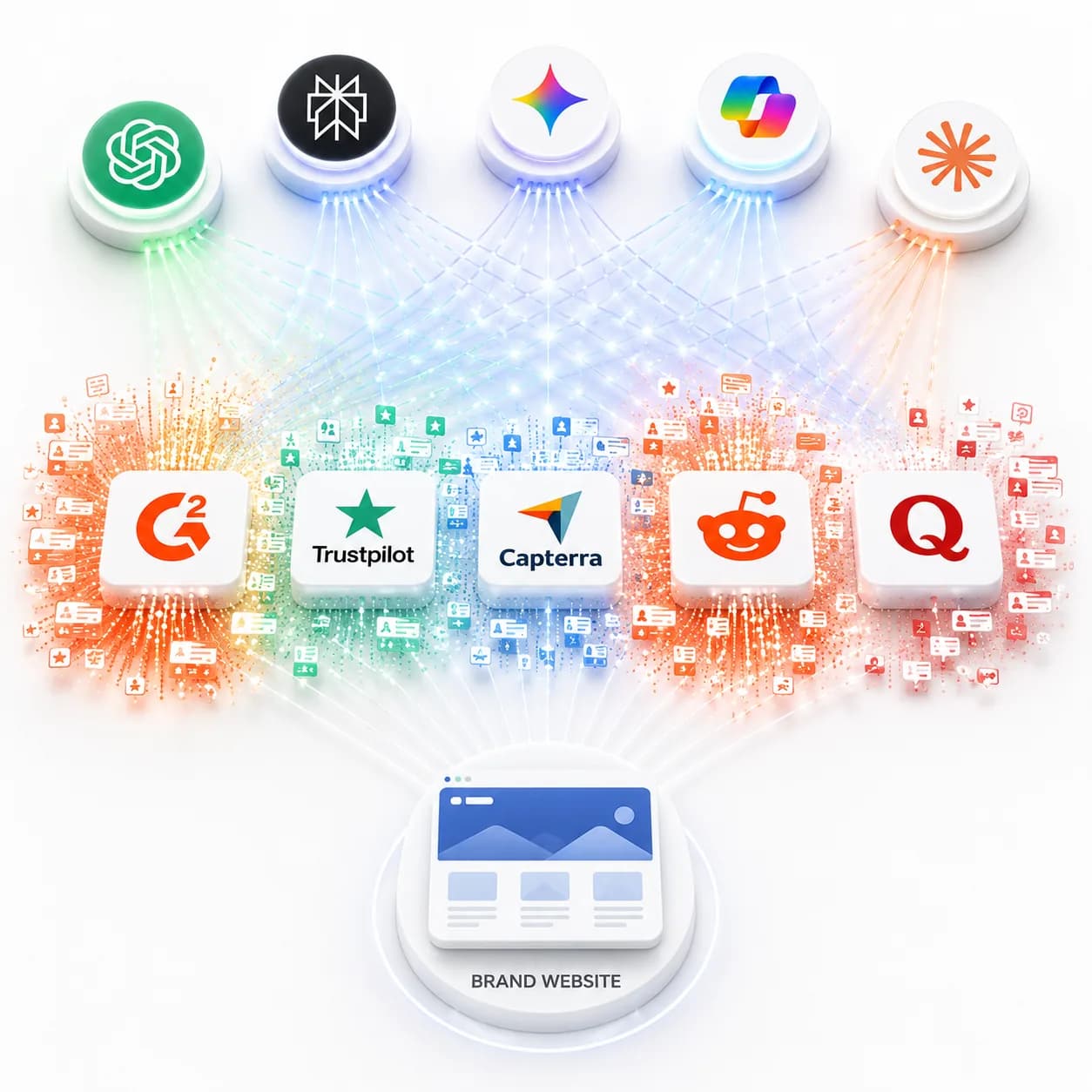
Because most of what agencies ship under the heading of AI visibility operates on pages the client owns, and answer engines mostly quote pages the client does not own. Blog posts, schema markup, an llms.txt file and on-page copy edits are all real work. None of them changes what a third-party roundup, a review platform or a community thread says about you.
That is the first thing to check, and it is checkable without an argument. Ask for the last quarter's deliverable list and sort every line into two piles: things published on a domain you control, and things published on a domain you do not. If the second pile is thin or empty, the work is aimed at the wrong surface, and no amount of doing more of it will move a citation rate.
What does an AI visibility agency do that an SEO agency does not?
An SEO agency improves pages you own so a search engine ranks them. An AI visibility agency works the sources an answer engine quotes, most of which are pages somebody else owns. The disciplines share a technical foundation and diverge completely after it.
| Work | Whose page | Moves rankings | Moves citations |
|---|---|---|---|
| Publishing and optimising site content | Yours | Yes | Rarely on its own |
| Technical crawlability and rendering | Yours | Yes | Prerequisite, not a lever |
| Schema and entity markup | Yours | Supporting | Disambiguation, not naming |
| Listicle and roundup placement | Theirs | Indirect | Yes |
| Review platform presence and velocity | Theirs | Indirect | Yes |
| Community and expert commentary | Theirs | Indirect | Yes |
Read the right-hand column and the diagnosis usually writes itself. An agency whose entire quarter sits in the top three rows is doing SEO, competently or otherwise, and calling it AI visibility. That is a scope problem rather than a competence problem, and the two get confused constantly because the work itself is often good.
The technical rows are not worthless. If an engine cannot crawl or render your pages, nothing downstream matters, which is why crawlability sits in the table as a prerequisite. What it is not is a thing you keep buying. It is fixed once and then verified.
What is the difference between AI search optimization and SEO services?
The difference is the deliverable, not the label. SEO services are sold in articles, technical fixes and links to your own domain. AI search optimization services are sold in placements, mentions and profile work on domains you do not control, plus the measurement to prove any of it happened.
The two are frequently sold under one another's names, in both directions. An SEO retainer relabelled as AI visibility is the common case. The rarer and more expensive case is an AI visibility retainer that quietly stops doing the off-site work when it gets hard, and backfills the report with content volume, because content is the deliverable that is always available to produce.
One question separates them on a call: how many placements on domains we do not own are committed per month, and what happens to the fee if they do not land. A vendor selling off-site work answers with a number. A vendor selling content answers with a process. Neither answer is dishonest; they describe different purchases. What the published rates for each look like is in what GEO agencies actually charge per month.
Do you need a separate agency for AI search?
You need the function, not necessarily a second vendor. If your current agency will commit to a monthly placement count on third-party domains and report citation share against named competitors, they can do this. If they will not commit to either, adding budget with the same vendor buys more of what already is not working.
- Keep one agency when they already run digital PR or outreach, and the change you need is where the work points rather than what the team can do.
- Keep one agency when your category is narrow enough that the target list is short, because relationship depth beats headcount on a short list.
- Split when off-site placement would be a new capability for them, since a team learning outreach on your budget is slower than one that already has the relationships.
- Split when the reporting conflict is unresolvable, because an agency measured on sessions has no reason to prioritise a mention that produces a citation and no click.
The reporting conflict is the one people underrate. An agency paid against traffic will rationally deprioritise work that produces a citation nobody clicks, and that citation is the entire point. Changing the metric sometimes fixes the agency without changing the agency. What a placement-committed scope looks like written down is on our services page, which is at least a template for what to ask yours for.
What should you ask before firing your agency?
Ask for four things in writing. The answers take an agency a day to produce if the work is real, and the absence of any one of them is more informative than any argument about performance.
- 01The deliverable list for the last quarter, split by whether each item published on a domain you own or one you do not.
- 02The baseline: which prompts were tracked, on which engines, how many runs each, and what the naming rate was on day one.
- 03The current naming rate on that same prompt set, measured the same way, so the two numbers are comparable.
- 04Which named competitors gained or lost citation share over the same window, because if everybody moved together the cause is the engine and not the agency.
An agency that cannot produce the second item never established a baseline, which means nothing they have done since is attributable in either direction. That is the single most common finding, and it is not necessarily evidence of bad work. It is evidence that neither of you can tell. What a baseline has to contain, and what one costs, is set out in what an AI visibility audit costs.
If you do not have a baseline and want one from somebody with no stake in the answer, that is what an $800 audit is for. Its most useful possible outcome is telling you your current agency is doing fine.
How long should AI visibility work take to show results?
Six to twelve weeks between a placement going live and an engine quoting it, and a full quarter before a programme has produced enough placements for the pattern to be readable. Judging an engagement at week four is judging it before the mechanism it depends on has had time to run.
The lag has a mechanical cause. A placement has to be published, then crawled, then indexed, then retrieved for a relevant prompt, and only then quoted. Every one of those steps is somebody else's schedule. It is also why the leading indicators are worth watching separately: pages indexed, then pages retrieved into an engine's working set, then pages actually cited. Movement in the first two with nothing in the third is a real signal, and it means extractability rather than reach is the problem.
What should worry you at week six is not the absence of citations. It is the absence of placements, because those are entirely within the agency's control and are the input everything else depends on.
Common questions
Receipts
02 sources- 01MoatWorks engagement termsThe six to twelve week lag between placement and citation, and the 90-day term that follows from it, as published on the pricing and services pages of this site.Last checked 13 August 2026
- 02Published agency rates, August 2026Retainer tiers and placement budgets from DerivateX, RevenueZen and Omniscient Digital, collected for the companion pricing post and used here for the deliverable comparison.Last checked 10 August 2026